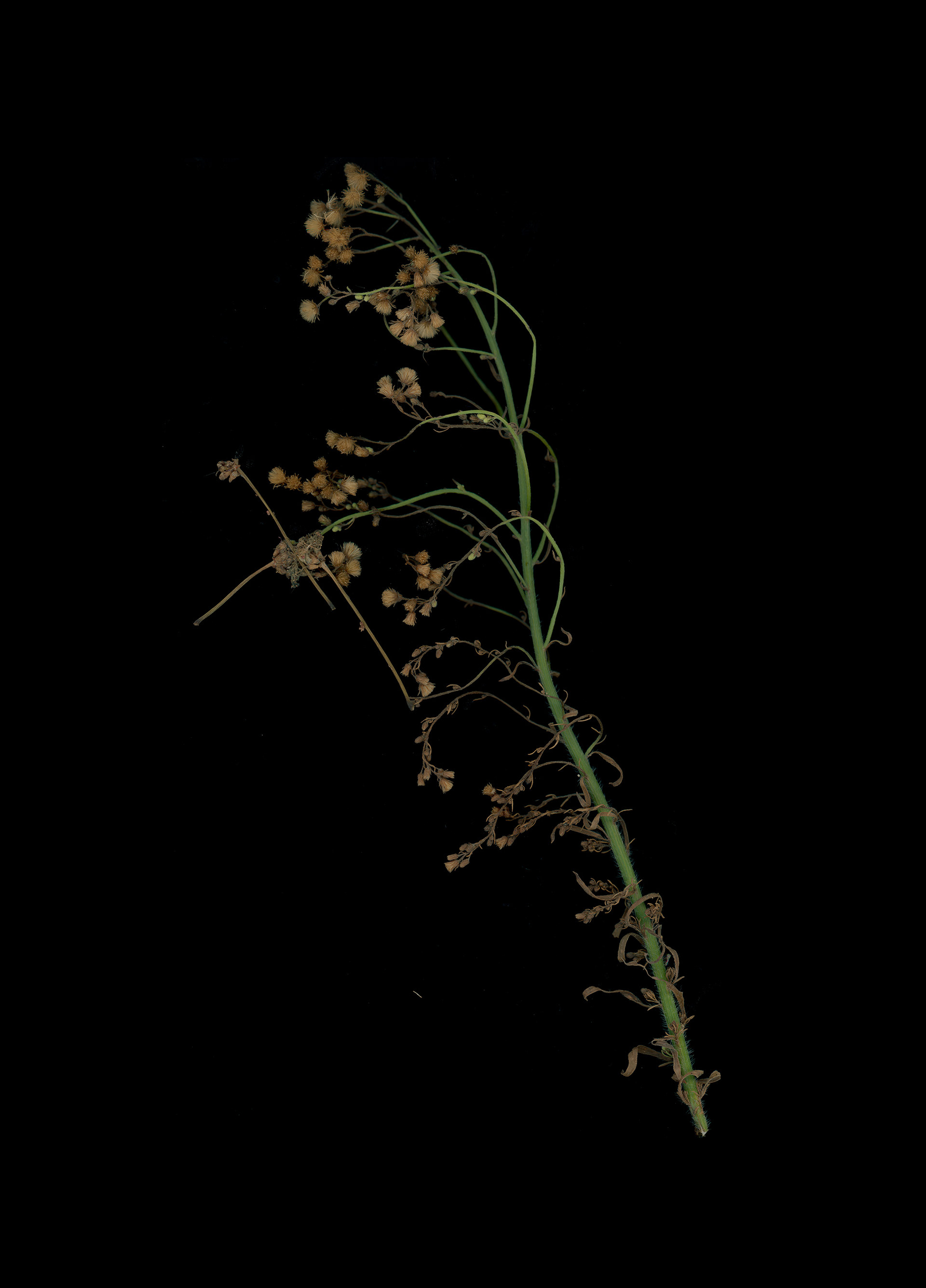
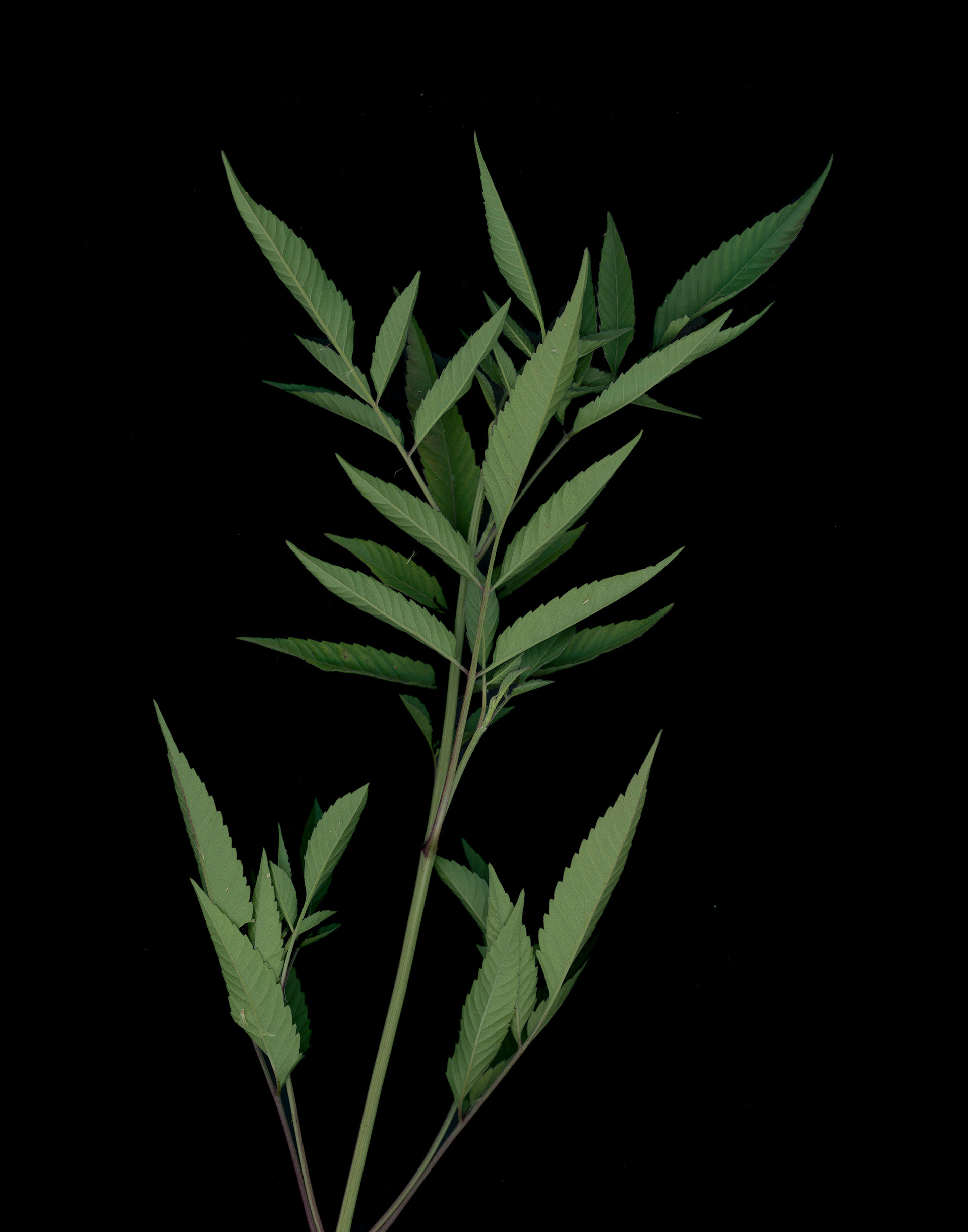
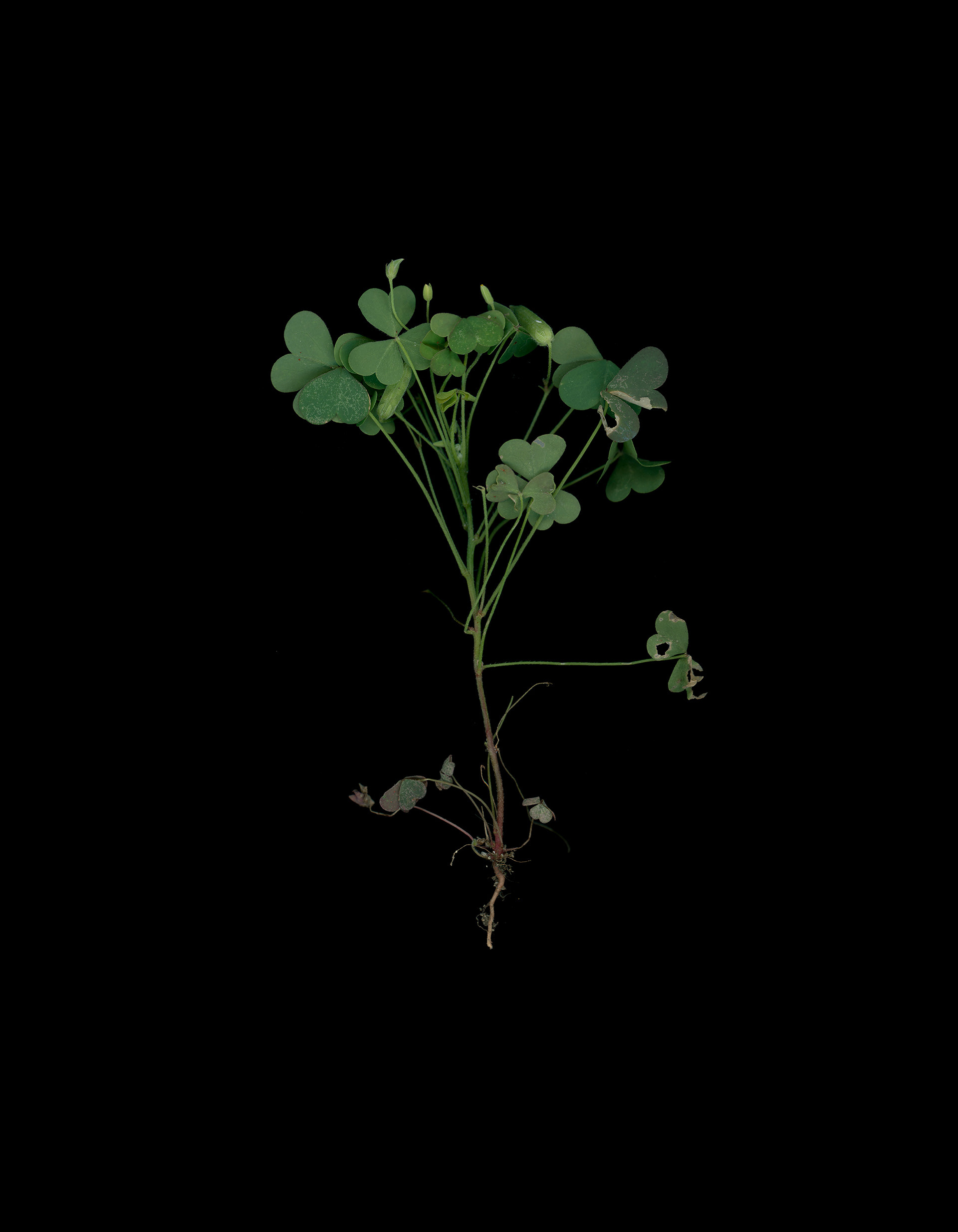
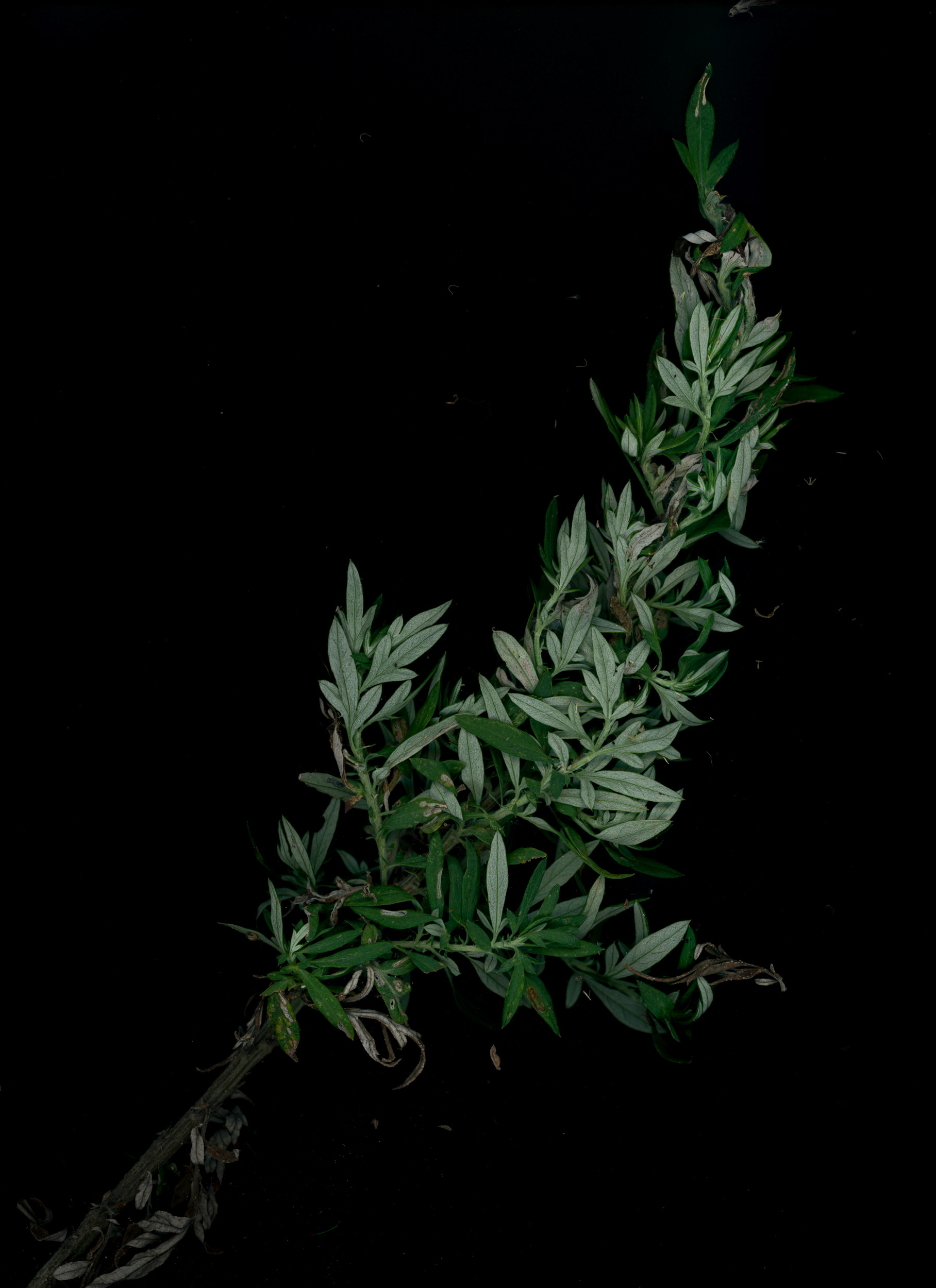
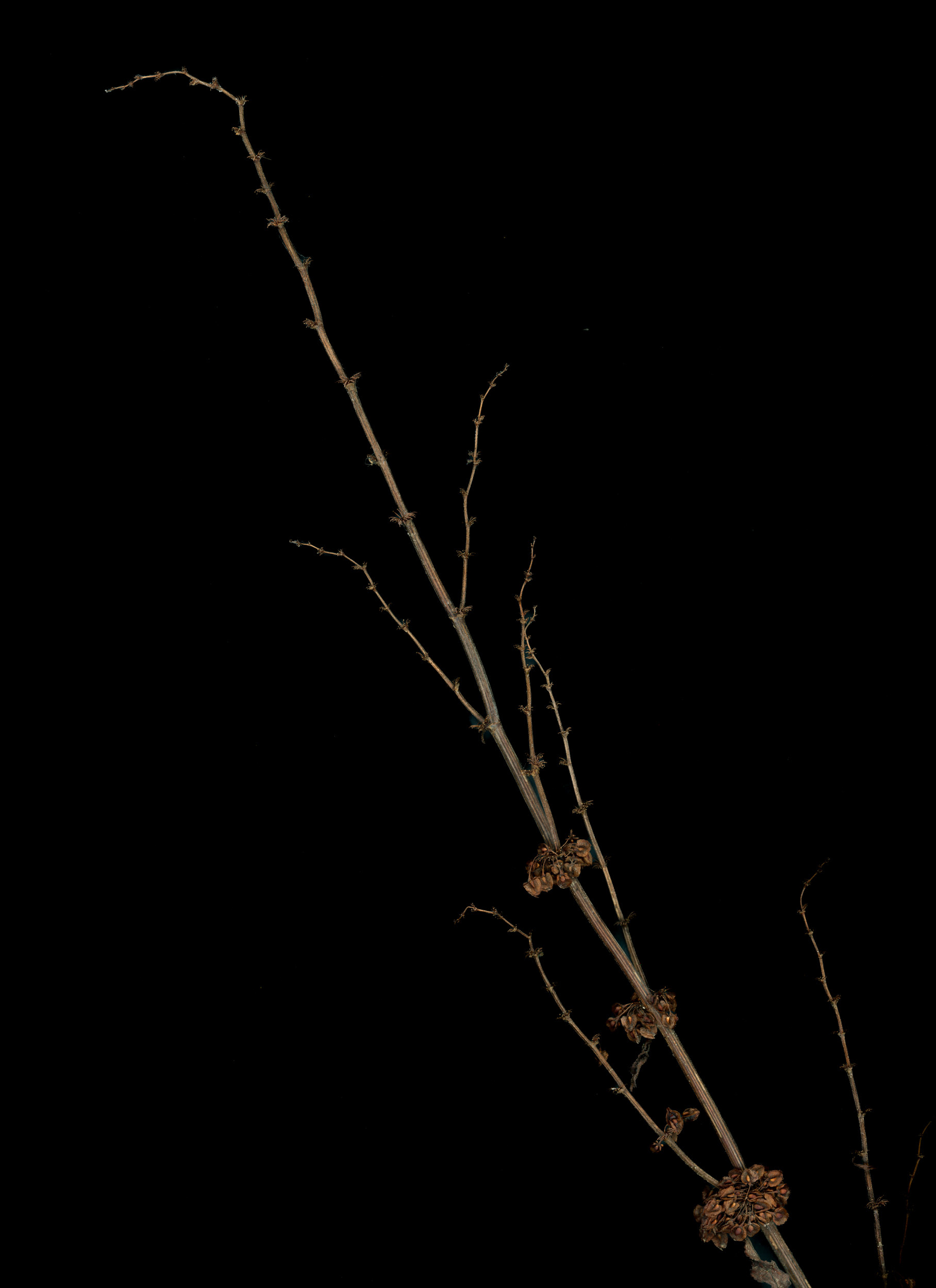
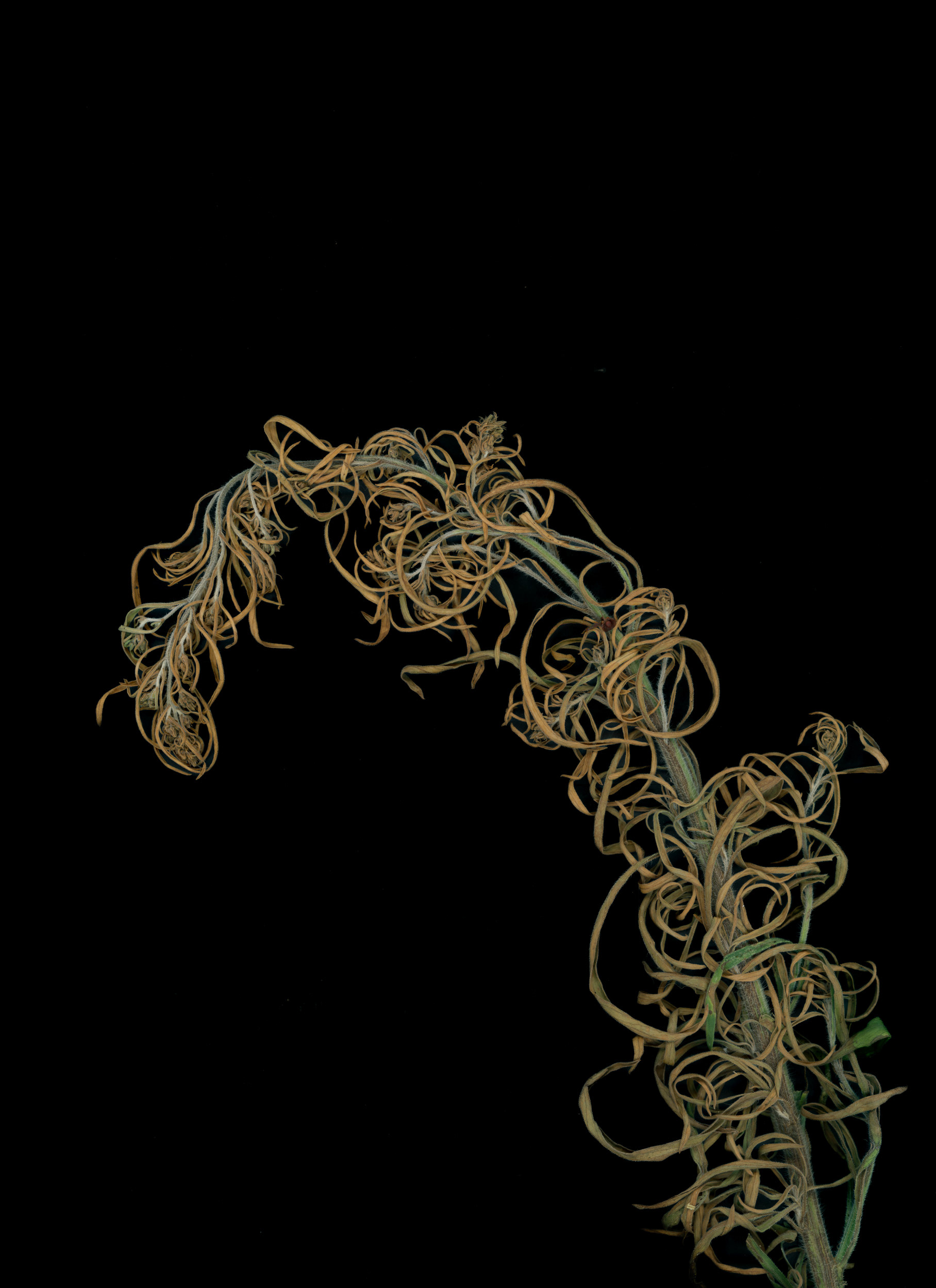
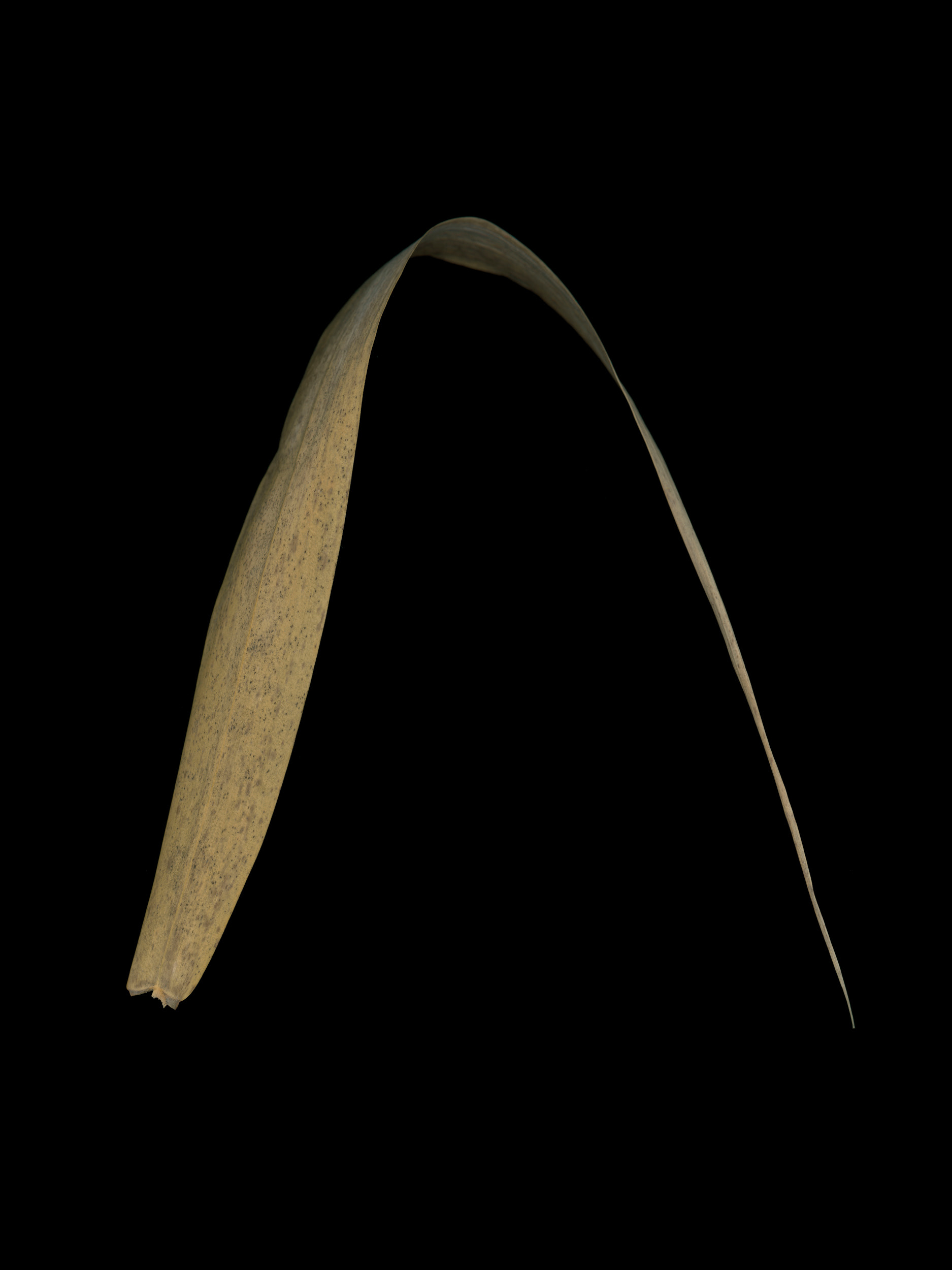
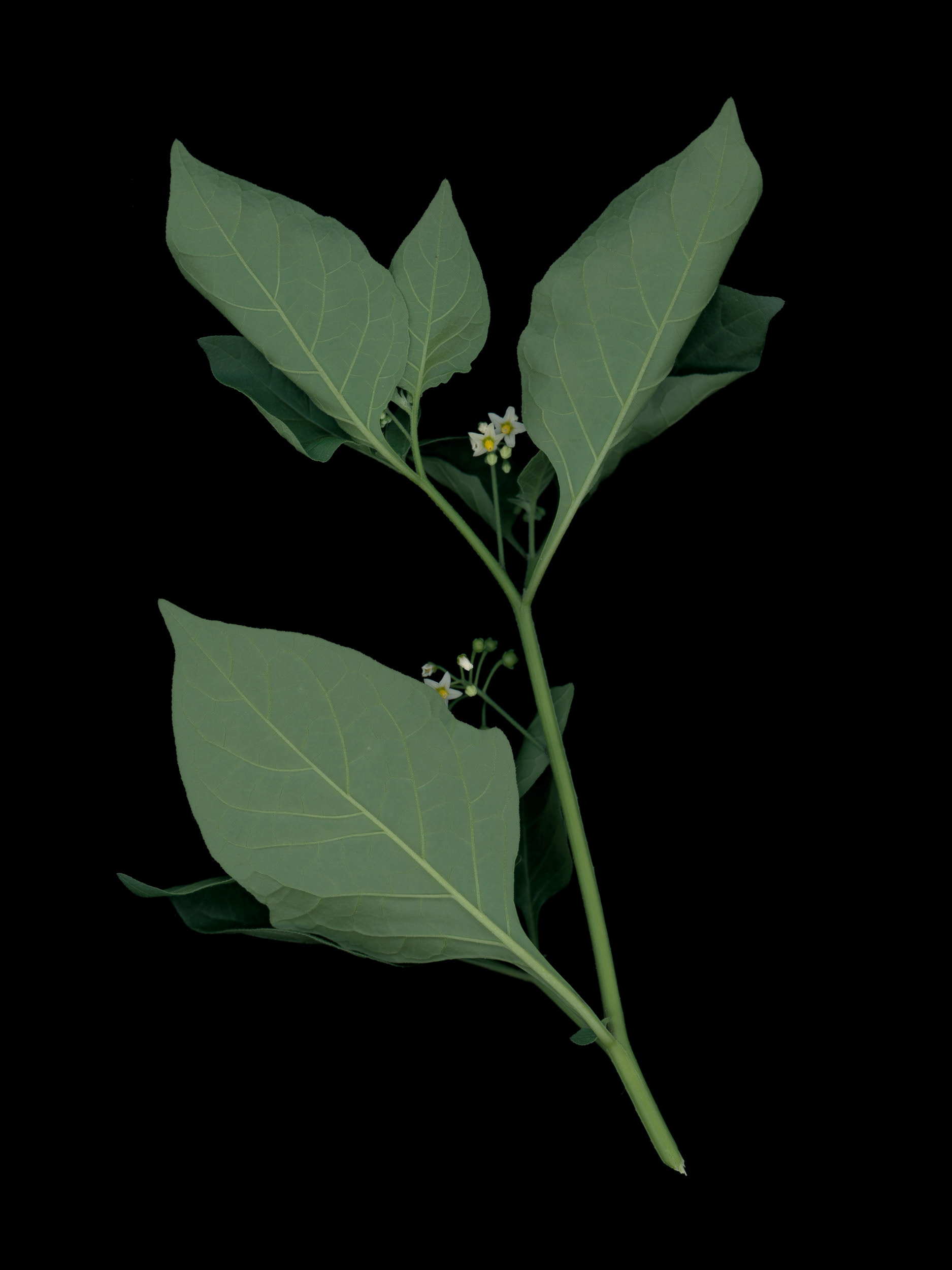
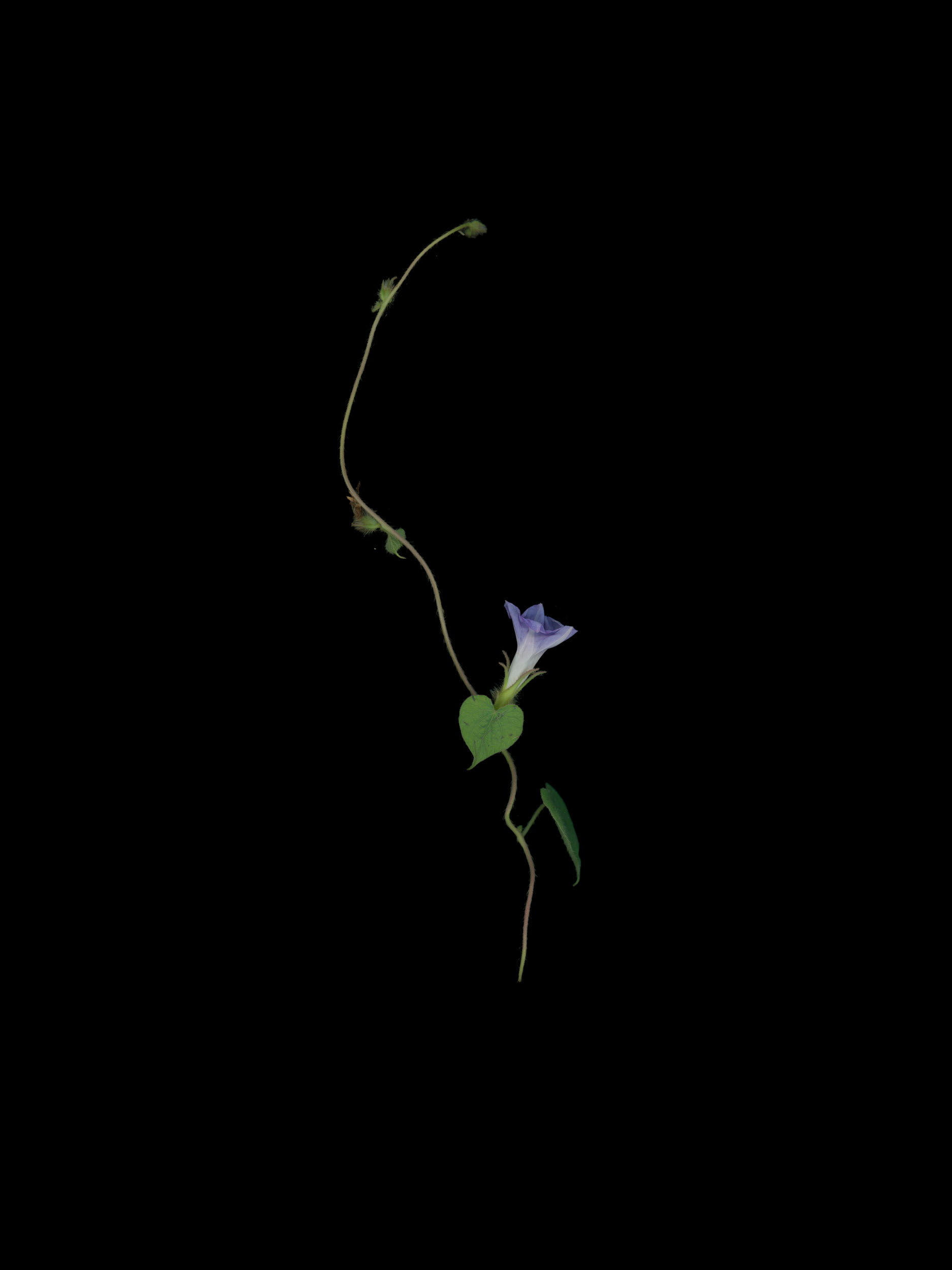
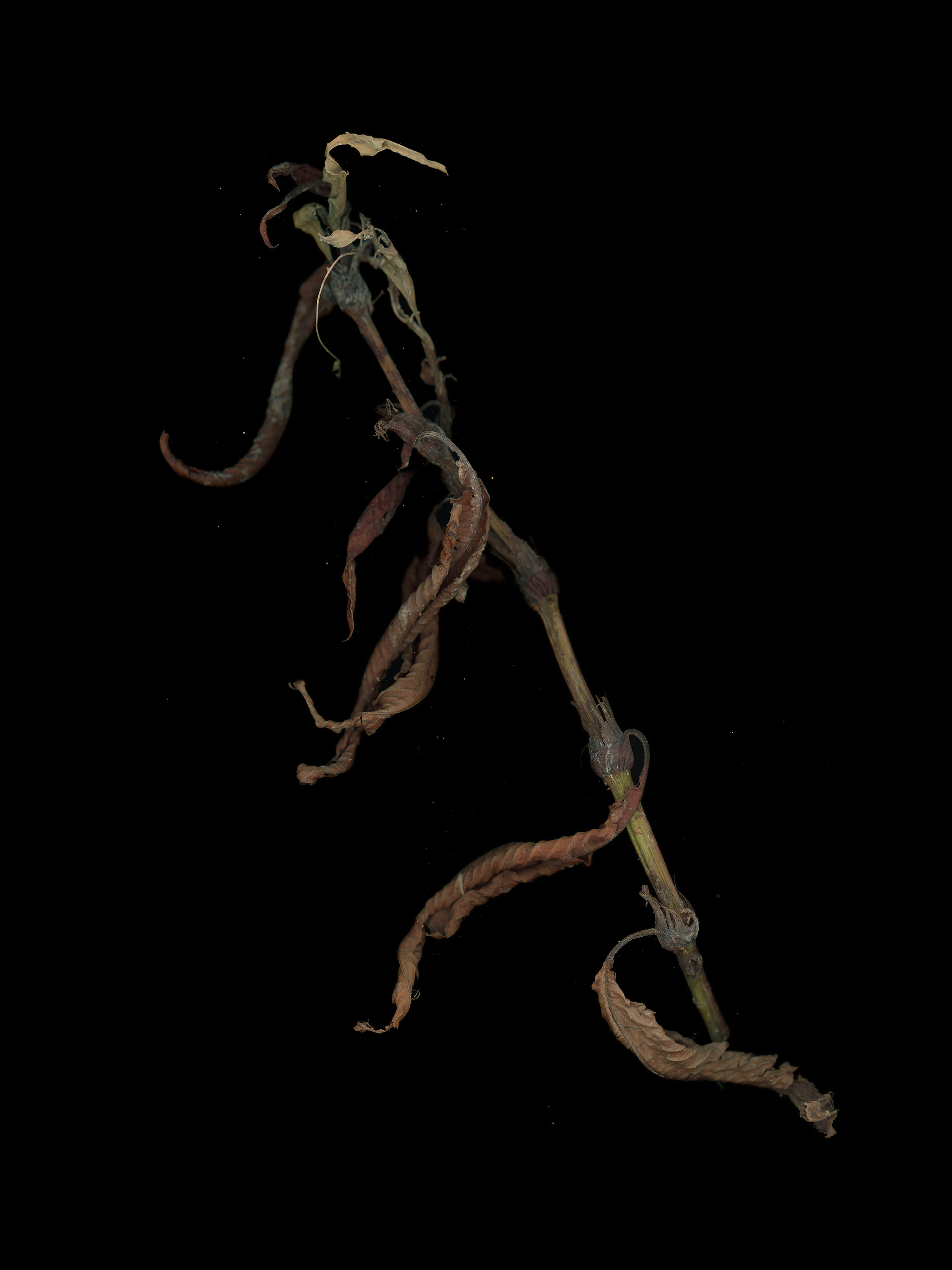
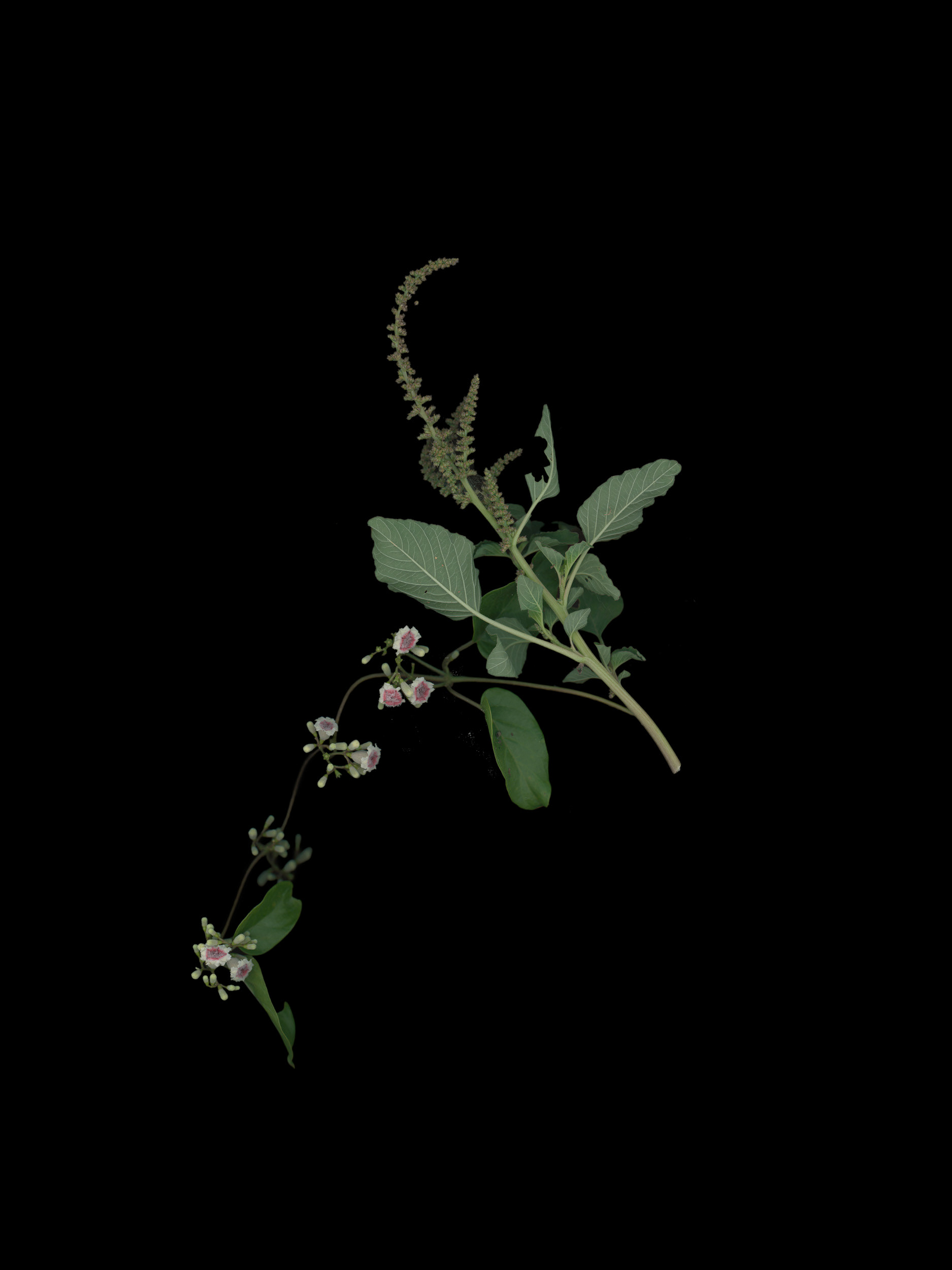
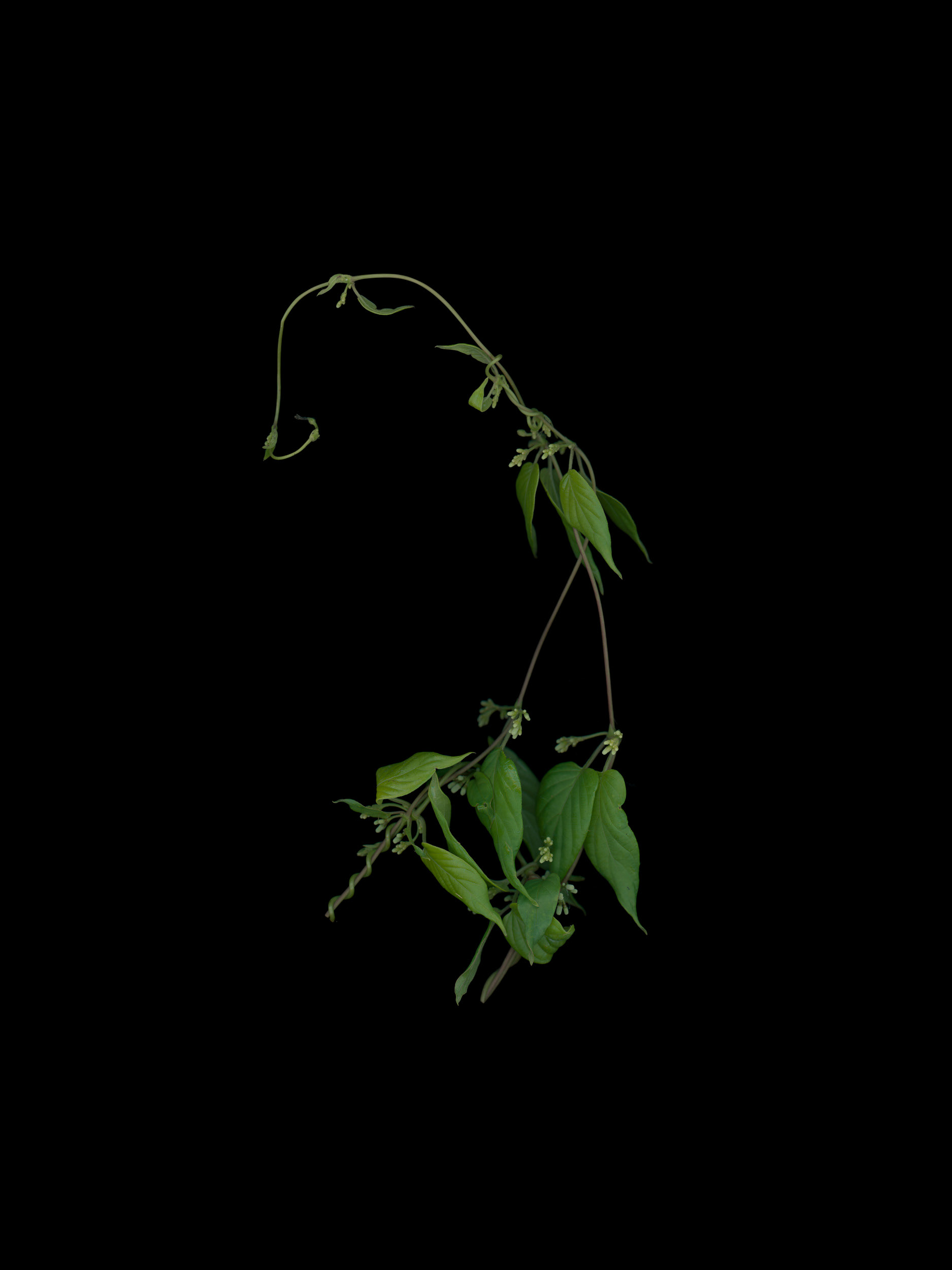
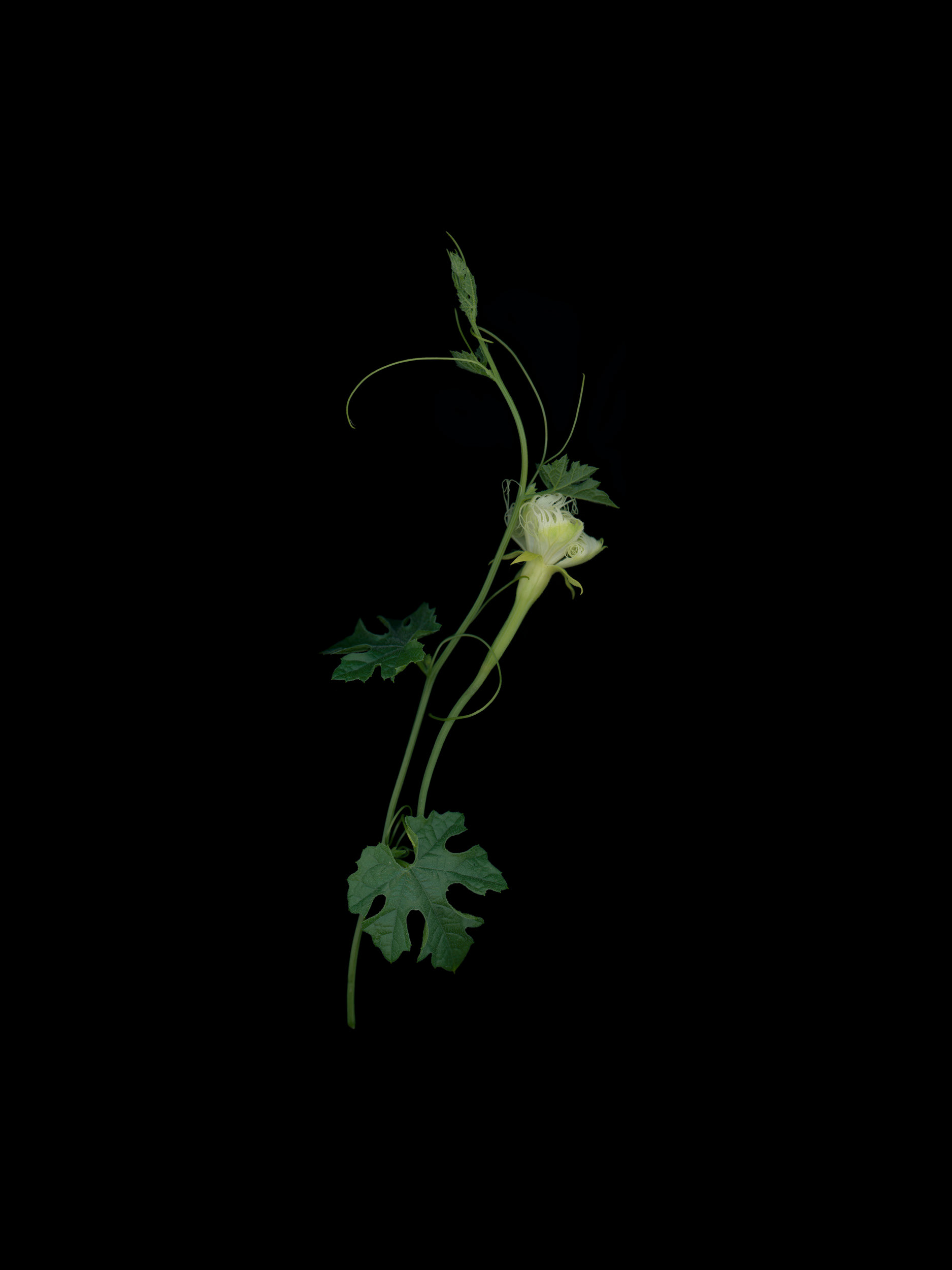
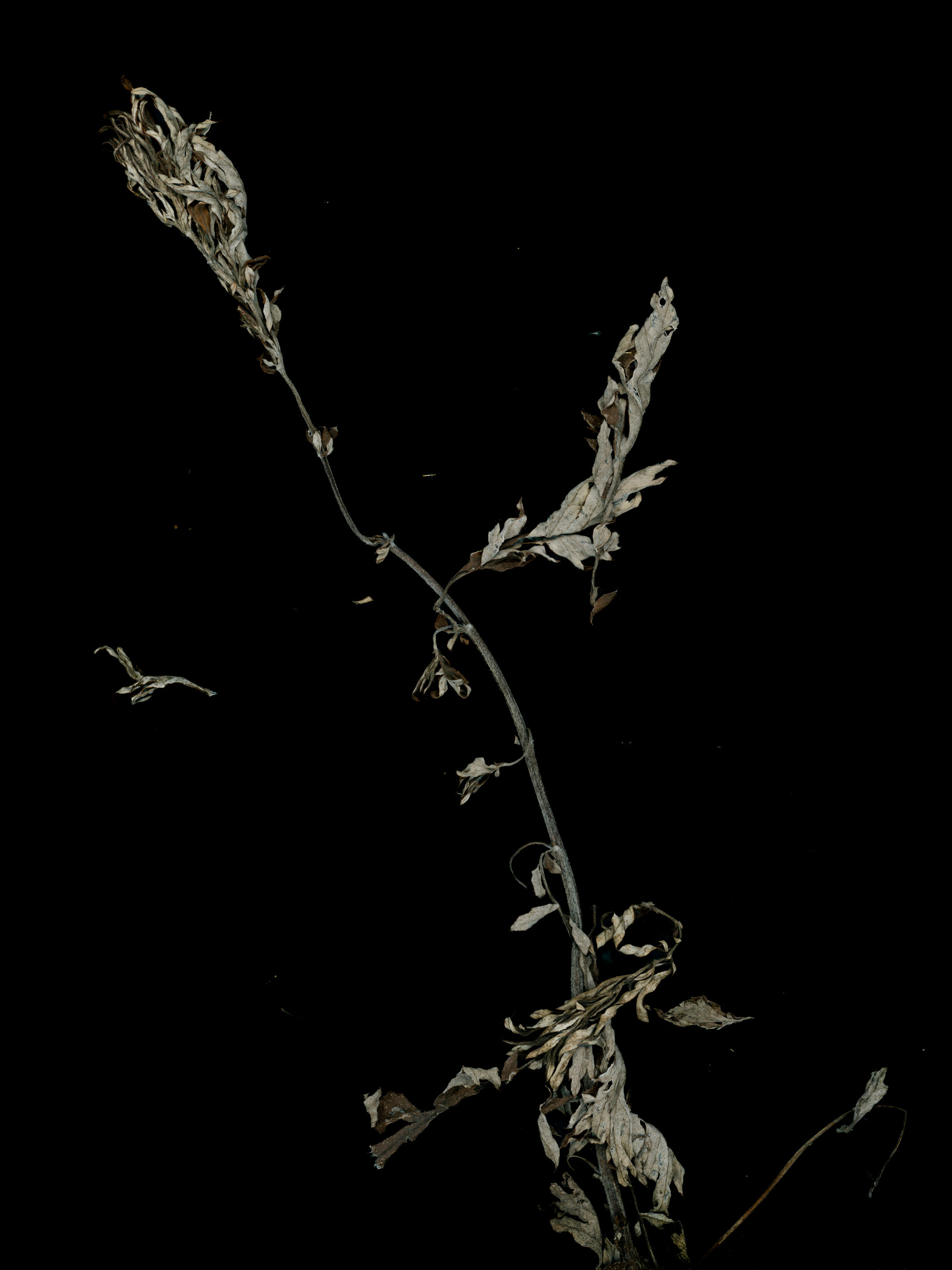
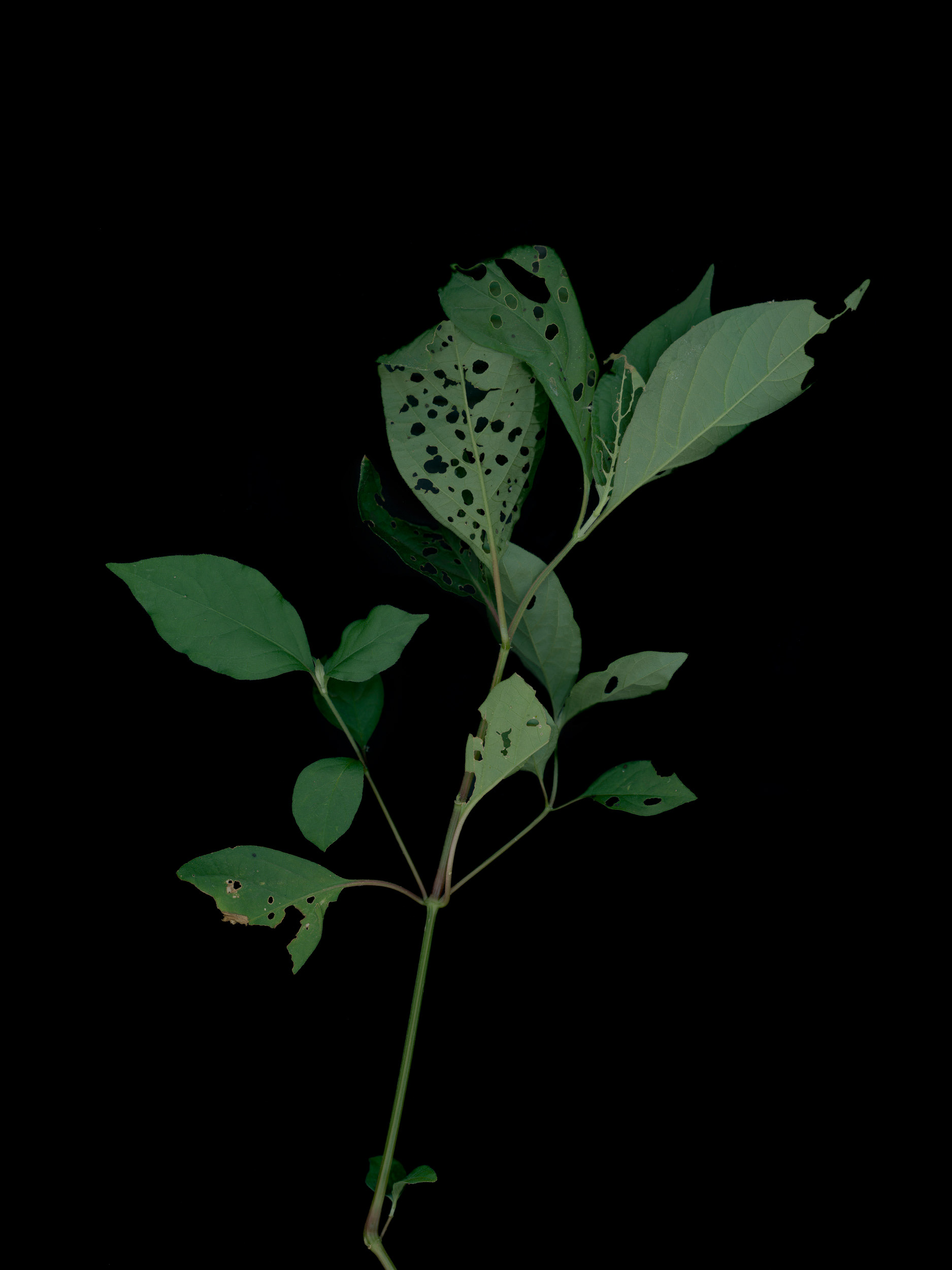
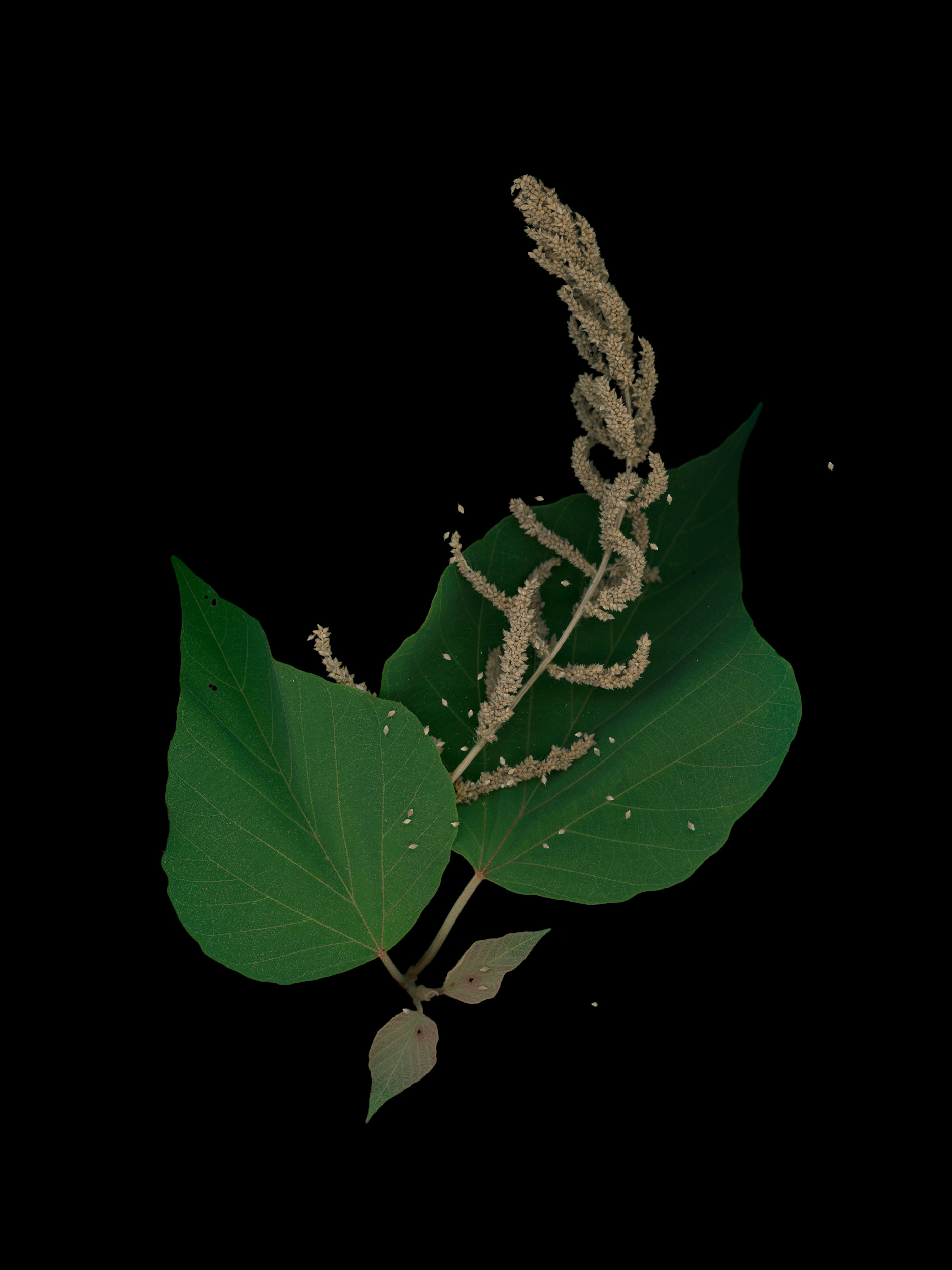
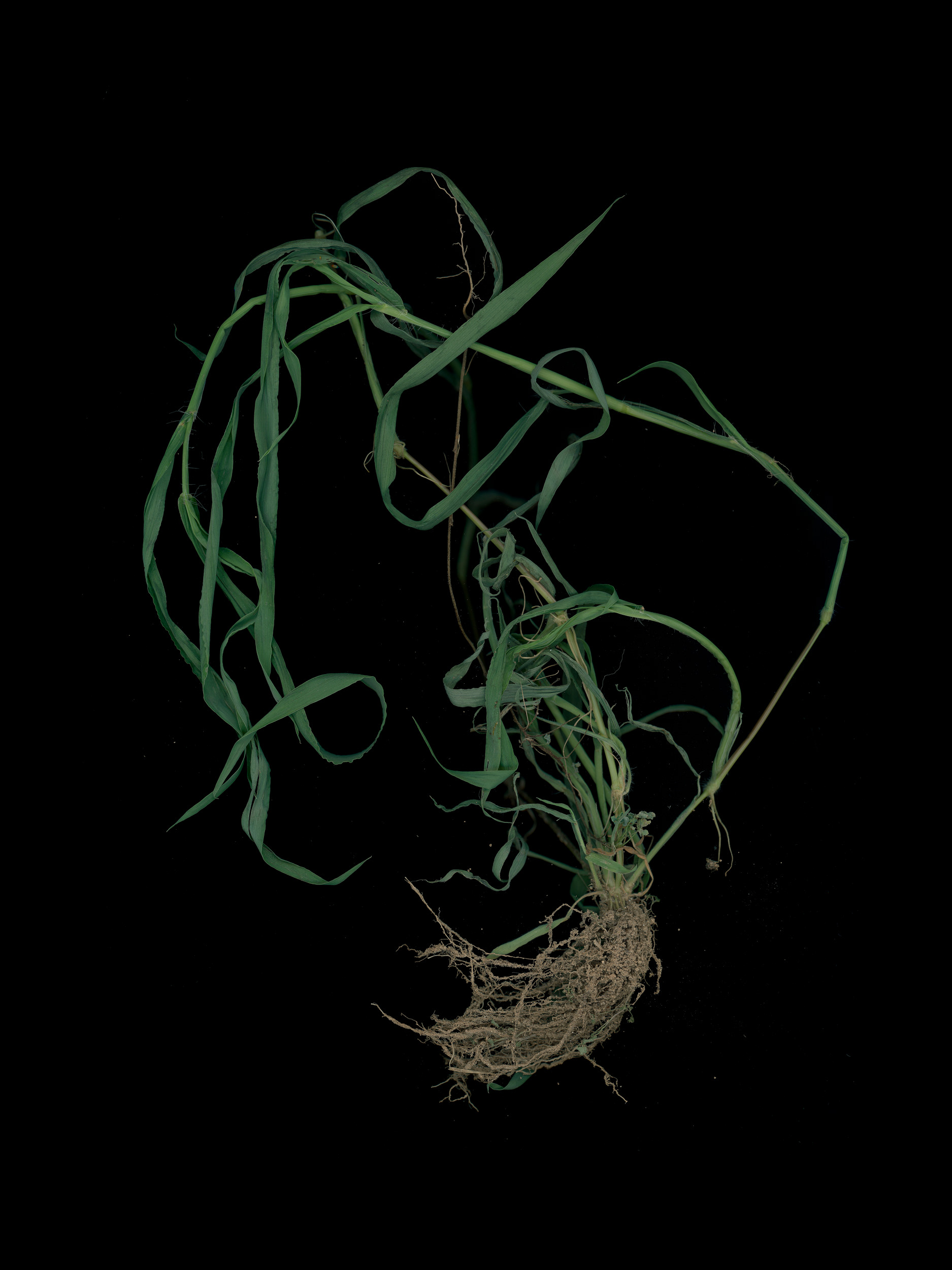
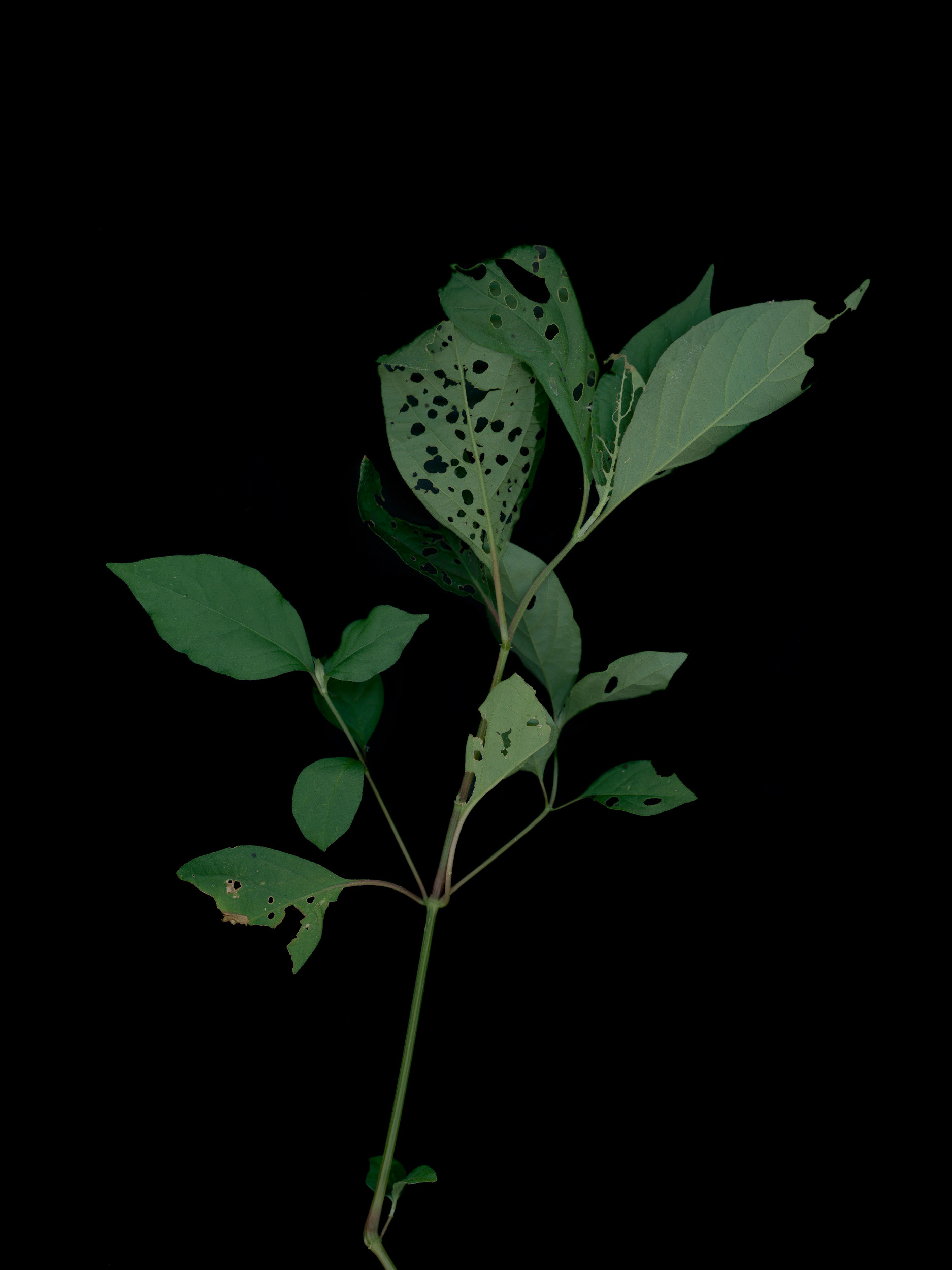
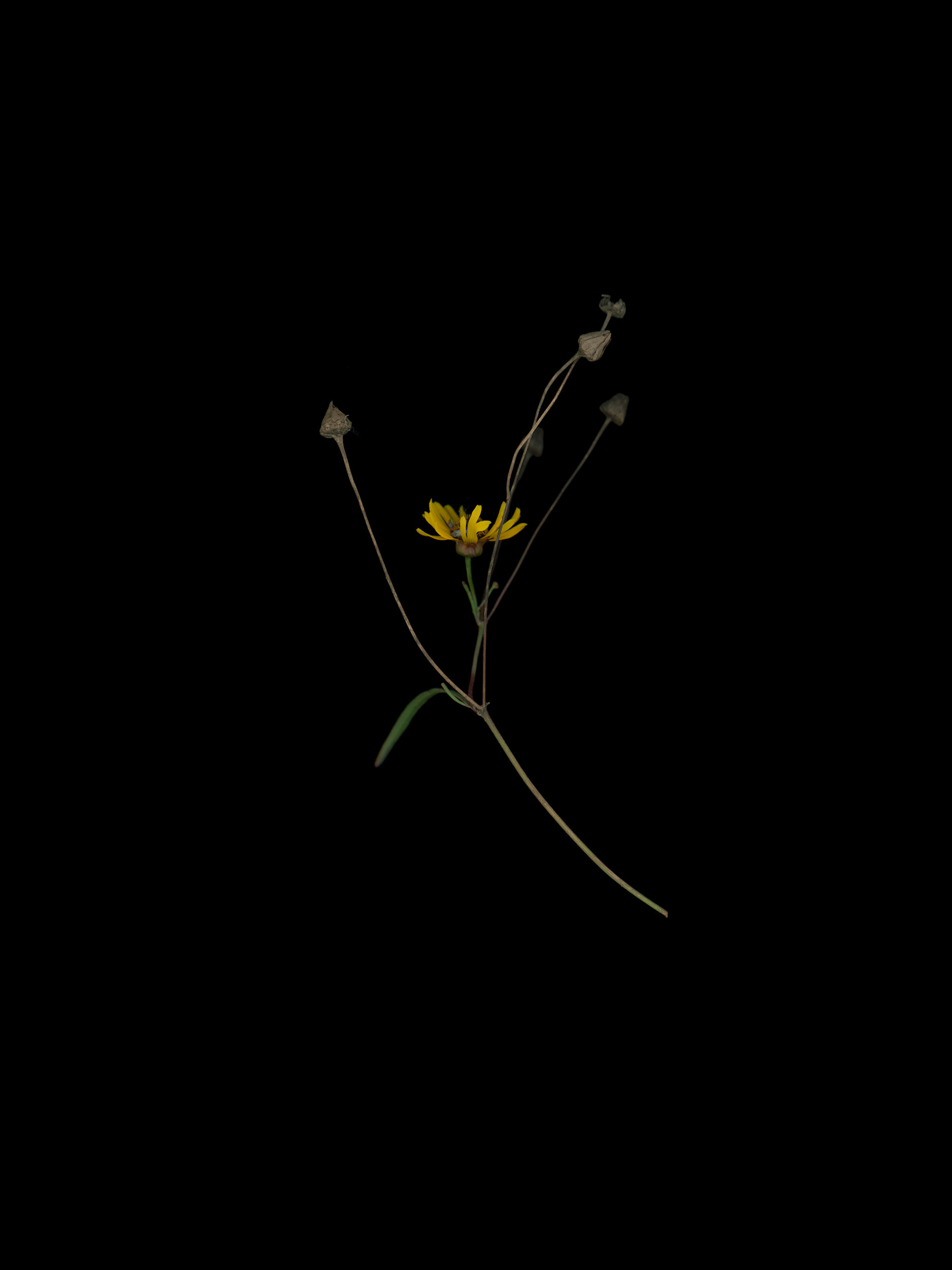
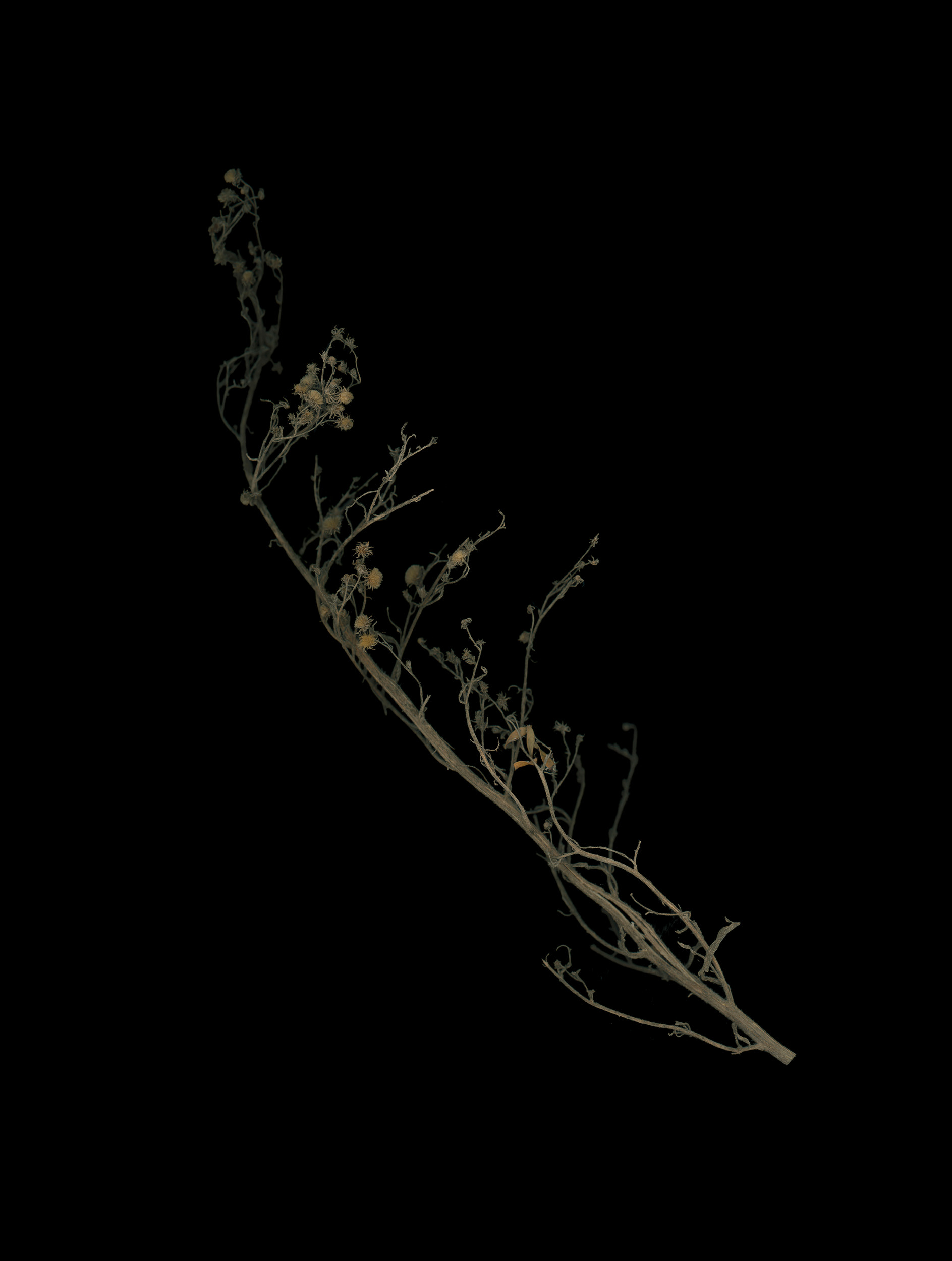
Weeds are conventionally classified as undesirable or invasive flora, identified and removed wherever human cultivation seeks order and control. They are routinely eradicated with chemical agents in agricultural fields, public parks, and manicured golf courses. For this project, I employed a high-resolution scanner to record weeds uprooted by human hands, including my own, from rural lawns and farmland. I also gathered stems and leaves from abandoned houses and long-fallow fields, where vegetation proliferates freely in the absence of human supervision. The resulting scans render the plants at a scale larger than life, revealing the minute and intricate structures that are often overlooked.
In landscapes where human presence has receded, weeds assert an ungoverned vitality, transforming abandoned architecture into dense botanical enclaves. They articulate a quiet but persistent counter-narrative to human dominion, suggesting a future in which the world reclaims itself beyond our tenure. Weeds decay, return to soil, and from that soil new growth inevitably emerges. Their life cycle embodies a continual process of erosion and renewal, reminding us that every constructed boundary remains provisional within the larger temporal horizon of the earth.